Friday, 3 July 2015

WHY YOU SHOULD NEVER EAT TILAPIA FISH? FARM RAISED FISH? ITS SO DANGEROUS!!!!


ALWAYS buy wild caught fish NEVER farm raised!
http://gagclip.com/wp-content/uploads/2015/07/till.jpg
I read several articles on Google about this, and even one that was defending the eating of tilapia said to avoid the fish that came from China. Also, I had just returned home from buying Albertson's 4-day special of 4 bags of frozen tilapia for the price of one. Sure enough, on the top of the bags, it read "farm raised", and on the bottom in small print it said, "China".
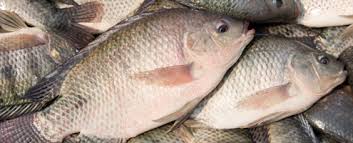
Image result for tilapia

I recently saw a Food inspector on TV.... He said he had lived overseas and he had seen the filthy conditions their foods are raised and processed in.

your code

It is enough to make you throw up. Some foreign workers have to wear masks as they work in these places, because the food is so rotten and filthy, it makes them want to throw up. Many of their Fish on Fish Farms are fed Raw sewage daily. He said he has seen so much filth throughout their food growing and processing that he would "never" eat any of it. They raise this filth, put some food coloring and some flavorings on it, then they ship it to the USA for YOU to consume and feed to YOUR families. They have no Food & Safety Inspectors. They ship it to you to buy and poison your families and friends.
 

Origins:   Tilapia are a fast-growing tropical species of fish native to Africa whose popularity in the commercial food industry has surged in recent years.

(Technically, tilapia is not the name of one specific species of fish but rather a common name for dozens of different species of cichlid fish.) Tilapia is now the fourth most-consumed seafood in the United States, after shrimp, tuna and salmon, and due to increased demand, much of the tilapia consumed by the public is now farm-raised rather than wild-caught. A June 2013 report from the Earth Policy Institute noted that worldwide production of farmed fish now not only exceeds the production of beef, but that consumption of farmed fish is soon expected to exceed consumption of wild-caught fish:
your code


The world quietly reached a milestone in the evolution of the human diet in 2011. For the first time in modern history, world farmed fish production topped beef production. The gap widened in 2012, with output from fish farming — also called aquaculture — reaching a record 66 million tons, compared with production of beef at 63 million tons. And 2013 may well be the first year that people eat more fish raised on farms than caught in the wild.
One of the reasons for the popularity of tilapia is that they are short-lived and primarily vegetarian and therefore do not accumulate substantial amounts of mercury by consuming other fish, as other common predatory food fish (such as tuna) do. This factor also means, as reported in a June 2013 National Geographic article, that tilapia are more efficient to farm because they eat lower on the food chain:
Andy Sharpless, the CEO of Oceana [an ocean conservation organization] explained that many popular food species like salmon are carnivorous, often devouring other fish. So when farmed, they eat upwards of five pounds of small fish to produce just one pound of salmon, a net loss of protein.

"We're actually taxing the oceans every time we eat farmed salmon instead of relieving it," said Sharpless. "Aquaculture should add edible protein to the world, not reduce it."

Carl Safina, author, conservationist, and Ocean Views contributor, said he isn't surprised that farmed fish have overtaken beef, because the process is more efficient. "It's probably more like Step One in a long-term downsizing," said Safina.

He explained that people will soon start eating more farmed carp and tilapia, because they are lower on the food chain, and therefore more efficient — a driving force in an increasingly overpopulated world.

"We're down mainly to two mammals (cows and pigs) and two birds (chickens and turkeys), and seafood is probably headed in that same direction as the spectacular variety of our overfished ocean yields to a few easily farmed, efficiently fed fish," said Safina. "A crowded world has less room for choices; that's the bull lurking in this china shop."
Farmed fish aren't necessarily inferior to their wild-caught brethren, any more than farmed beef or grain is inferior to wild varieties of those foods. And there's no guarantee that wild-caught fish are a safer food source than farmed fish, as the former often ingest a variety of toxins and other pollutants that flow into the world's waterways. However, farmed tilapia can vary considerably in quality based on where they are produced. Tilapia are typically farmed in the U.S. and Canada using tanks with closed recirculating systems, but much of the tilapia consumed by Americans is imported from Latin America and Asia (particularly Ecuador, China, and Taiwan), where the fish are usually raised in outdoor freshwater ponds. (China is the world's largest producer of farmed tilapia, supplying approximately 40% of global production; nearly 40% of that output is exported to the U.S., primarily in the form of frozen fillets.) As reported by the Environmental Defense Fund (EDF), in Ecuador tilapia are grown at low densities alongside shrimp to reduce water pollution, resulting in less disease and chemical use. But in China and Taiwan, water pollution and the use of chemicals in tilapia farming is a concern.

One of the issues with tilapia farmed in China is that smaller, independent farmers face economic pressures to use animal manure rather than more expensive commercial feed for farmed fish, a practice which contaminates water and makes the fish more susceptible to spreading foodborne diseases. A July 2009 report from the U.S. Food and Drug Administration (FDA) on the safety of food imports from China noted that in that country "Fish are often raised in ponds where they feed on waste from poultry and livestock" and cited an increased rate of FDA rejection of fish imports from China between 2000 and 2008:
your code


Fish and shellfish products were the industry group with the most refusals from China, followed by vegetables and fruit products. Fish/shellfish share of refusals from China doubled from about 20 percent in 2000-04 to nearly 40 percent in 2007-08. Food and Water Watch also drew attention to the high incidence of safety problems with fish and shellfish imports from China.

Eels (frozen and/or roasted), catfish fillets, and shrimp accounted for most of the refused fish/shellfish shipments, but a wide variety of other products were also refused, including tilapia, tuna, monkfish, squid, jellyfish, crawfish, crab, cod, mackerel, and other fish species. The large number of fish and shellfish refusals may reflect increased monitoring of these products that began in 2006 due to chronic problems.
Similarly, an October 2012 Bloomberg article observed that the FDA had rejected 820 Chinese seafood shipments since 2007, including 187 that contained tilapia, and furnished examples of the practice of using manure as feed for farmed fish in China:
At Chen Qiang's tilapia farm in Yangjiang city in China's Guangdong province, which borders Hong Kong, Chen feeds fish partly with feces from hundreds of pigs and geese. That practice is dangerous for American consumers, says Michael Doyle, director of the University of Georgia’s Center for Food Safety.

"The manure the Chinese use to feed fish is frequently contaminated with microbes like salmonella," says Doyle, who has studied foodborne diseases in China.

On a sweltering, overcast day in August, the smell of excrement is overpowering. After seeing dead fish on the surface, Chen, 45, wades barefoot into his murky pond to open a pipe that adds fresh water from a nearby canal. Exporters buy his fish to sell to U.S. companies.

Yang Shuiquan, chairman of a government-sponsored tilapia aquaculture association in Lianjiang, 200 kilometers from Yangjiang, says he discourages using feces as food because it contaminates water and makes fish more susceptible to diseases. He says a growing number of Guangdong farmers adopt that practice anyway because of fierce competition.

"Many farmers have switched to feces and have stopped using commercial feed," he says.
The Monterey Bay Aquarium's Seafood Watch program issued a report on pond-farmed tilapia from China in June 2012 which upgraded its previous "Avoid" recommendation to a "Good Alternative," although that organization's ratings primarily focus on environmental sustainability and ecological impact rather than food safety issues. China's increased recommendation status was due mostly to a reduction in water use and the discharge of effluent by tilapia farmers — factors which are local environmental concerns — rather than enhanced food safety measures. The report noted that use of banned chemicals by Chinese tilapia farmers is an ongoing concern:

Most Chinese tilapia is farmed in ponds. Recent reductions in water use, achieved by only emptying the ponds at the time of each harvest, has also reduced discharge of effluent to the environment. Both of these factors were sufficient to raise this recommendation from its previous "Avoid" to a "Good Alternative."

Chinese farms do discharge the water without relevant treatment, however, and there is evidence that some banned chemicals — including antibiotics and fungal treatments (nitrofurans and malachite green) — are still used in Chinese tilapia production.

Overall, Chinese tilapia gets a moderate overall score of 5.34 out of ten. Tilapia as a species has the potential to be raised in sustainable ways, but the increasing intensification and industrialization has resulted in one "Red" score for the Chemical Use criterion. This means that the overall ranking is "Yellow," and therefore the recommendation is "Good Alternative."
Making a blanket determination about whether American consumers should shun all food (or all of a particular type of food) imported from China is problematic because, as the FDA noted, the Chinese food industry is so broad and diverse:
Making generalizations about China’s food industry is difficult. Several thousand modern, large-scale, multinational and joint venture companies and farms that use best practices and sophisticated equipment operate alongside millions of small independent farms, workshops, and merchants that use crude equipment and techniques. China has some 200 million farming households with average land holdings of 1-2 acres per farm and at least 400,000 food processing enterprises, most with 10 or fewer employees. Millions of people and businesses are involved in the handling and transportation of food beyond the farm gate. The vast number of food suppliers increases the challenge of disseminating standards, monitoring production, and tracing problems to their source.

Thursday, 25 June 2015

Trying To Kick The Habit? These Foods Make It Easier For Smokers To Quit


As any smoker trying to quit knows, the process of giving up the habit isn’t always easy. Quitting “cold turkey” is virtually impossible, as the urge to light up lingers, and a return to the behavior after not too long is common. In fact, nicotine has been shown to be as addictive as heroin, reinforcing the fact that trying to quit is indeed challenging. Furthermore, trying methods that involve skin patches, e-cigarettes, pills and even hypnotherapy can be costly, harmful to health or ineffective.
 quit_smoking_colon_health
However, there are certain foods that can naturally keep the urge to smoke at bay, while also helping to heal the damage that’s taken place in the smokers body.
Foods that fight urge to light up
Crunchy, healthy foods
Because smoking dulls taste buds, a person in the process of quitting has a newfound appreciation for the taste of foods. For this reason, as well as the tendency to fulfill the hand-to-mouth habit, weight gain is common among people trying quit. Rather than reaching for processed junk foods like chips that lead to weight gain and fill the body with toxins, choose ones that are just as flavorful but significantly healthier.
The American Cancer Society recommends such foods, explaining that these kinds of low-calorie choices have the ability to satisfy cravings without leading to extra weight gain.
Carrots, nuts, celery and grapes are all ideal foods that not only satisfy smokers’ cravings but provide the body with necessary physical and emotional health benefits as it starts repairing itself. For example, nuts contain serotonin, known to boost the mood and help fight depression, a feeling that many smokers experience upon quitting.
Give superfoods a try
Superfoods are great for the body anyway, but some are known to fight nicotine cravings. An amazing combination of maca and mucuna, for example, has been shown to help wean smokers away from their habit by reducing the desire to light up while keeping any related mood swings in check.
Food and drinks to avoid
Avoid alcohol, sugary foods and spices, as they are known to intensify the urge to smoke. (2) Be sure to drink plenty of water and fill up on a great deal of fruits and vegetables.

WEIGHT LOSS ADVICER: How to Lose Weight Fast: 3 Simple Steps, Based on ...


WEIGHT LOSS ADVICER: How to Lose Weight Fast: 3 Simple Steps, Based on ...: There are many ways to lose a lot of weight fast. However, most of them will make you hungry and unsatisfied. If you don’t have i...

WEIGHT LOSS ADVICER: 6 Proven Ways to Lose Belly Fat (No. 2 and 3 are B...


WEIGHT LOSS ADVICER: 6 Proven Ways to Lose Belly Fat (No. 2 and 3 are B...: Overweight does not necessarily equal unhealthy. There are actually plenty of overweight people who are in excellent health ( 1 ). ...

WEIGHT LOSS ADVICER: The 20 Most Weight Loss Friendly Foods on The Plan...


WEIGHT LOSS ADVICER: The 20 Most Weight Loss Friendly Foods on The Plan...: The 20 Most Weight Loss Friendly Foods on The Planet Not all calories are created equal. Different foods go through different metab...

WEIGHT LOSS ADVICER: 6 Ways to Burn Your Belly Fat Fast


WEIGHT LOSS ADVICER: 6 Ways to Burn Your Belly Fat Fast: Eight Easy Steps To Lose Weight Fast ...

WEIGHT LOSS ADVICER: How to Lose Weight Naturally


WEIGHT LOSS ADVICER: How to Lose Weight Naturally: How to Lose Weight Naturally (22 Home Remedies) In the E...

WEIGHT LOSS ADVICER: Natural Home Remedies to Lose Weight


WEIGHT LOSS ADVICER: Natural Home Remedies to Lose Weight: Natural Home Remedies to Lose Weight – Weight Loss From Kitchen Whether you are a youngster, teenager, parent or an employee, y...

WEIGHT LOSS ADVICER: 10 Best Exercises To Lose Arm Fat At Home


WEIGHT LOSS ADVICER: 10 Best Exercises To Lose Arm Fat At Home: 10 Best Exercises To Lose Arm Fat At Home – Best Arm Toning Workouts Flabby or big arms can really put you down and ruin your ...

WEIGHT LOSS ADVICER: Prevent Obesity Getting Rid Of Being Overweight


WEIGHT LOSS ADVICER: Prevent Obesity Getting Rid Of Being Overweight: In order to prevent obesity and being overweight from tearing up your dreams of being fit there is always something you can do before it&#...

WEIGHT LOSS ADVICER: The Most Dangerous Foods for Overweight


WEIGHT LOSS ADVICER: The Most Dangerous Foods for Overweight: A New England Journal of Medicine study (June 23, 2011, pp 2392-2404) found the following foods most conducive to weight gain: FOOD, ...

WEIGHT LOSS ADVICER: Is Alcohol Your Weight Loss Kryptonite?


WEIGHT LOSS ADVICER: Is Alcohol Your Weight Loss Kryptonite?: According to conventional wisdom, the infamous “beer belly” is caused by the calories from alcohol being stored as fat. There are also ...

Tuesday, 23 June 2015

15 Pregnancy Power Foods


These healthy choices have the nutrients that you and your growing baby need.

Breakfast Cereal

Fortified Breakfast Cereal

You knew folate was important before conception and during your first few weeks of pregnancy, but your needs for the B vitamin stay high the whole nine months. Experts advise getting 400 micrograms per day through vitamin supplements or fortified foods (breakfast cereal is an easy way to do it, since many brands contain 400 micrograms per bowl), and another 200 micrograms through foods that are naturally high in folate, such as asparagus and black-eyed peas.

Dried Beans & Lentils

 Lentil Salad
All women need 10 extra grams of protein a day during pregnancy (for a total of at least 60 grams); beans and lentils are an excellent source, with about 15 grams per cup. They're also high in fiber, which helps to combat constipation. And 1 cup of cooked lentils meets half of your daily folate requirement. "Add them to rice dishes and salads," suggests Lola O'Rourke, RD, spokesperson for the American Dietetic Association.

Broccoli

 Broccoli
It's not only packed with nutrients that are necessary for a healthy pregnancy -- such as calcium and folate -- but broccoli is also rich in fiber and disease-fighting antioxidants. And since it contains plenty of vitamin C, this popular green vegetable will help your body absorb iron when it's eaten with an iron-rich food, such as whole wheat pasta or brown rice.


How to Eat Healthy During Pregnancy: Making a Healthy Lunch

view 

Nonfat Milk

 Nonfat Milk
Your body absorbs roughly twice as much calcium from foods while you're pregnant, so your daily needs remain the same. But since most of us get too little calcium to begin with, drinking more nonfat milk is a smart move. Each 8-ounce glass supplies about 30 percent of the recommended dietary allowance of 1,000 milligrams.

Bananas

Bananas
Bananas are rich in potassium and offer quick energy to fight off pregnancy fatigue. "They're also easy on your stomach if you're nauseated," says O'Rourke. Slice them up into cereal or whip one into a breakfast smoothie with yogurt, berries, ice, and a splash of orange juice.

 How to Eat Healthy During Pregnancy: Making a Healthy Dinner

view 

Lean Meat

 Raw Chicken
Your daily iron needs double during pregnancy, so it's important to include plenty of iron-rich foods now. "If you don't have good iron stores, you're more likely to feel tired," warns Jo Ann Hattner, RD, a dietitian in Palo Alto, California. Meat delivers a form of iron that's easily absorbed by your body.


How to Keep Your Sex Drive Alive During Pregnancy


How to Keep Your Sex Drive Alive During Pregnancy.

 Getting it on with a growing belly isn't always easy. We asked the experts to alleviate common concerns so you can have more fun.

Sometimes You Just Don't Feel Sexy

happy pregnant couple
Frances Janisch
When I was pregnant with our son, my husband, Rob, got an earful of progressively creative "sorry honey, not tonight" excuses. Among them: "I can't, I have to massage my stretch marks with cod liver oil. My linea negra is showing. I have areolae the size of saucers." (Suffice it to say, they were not my cup of tea.). Rumor has it that some women experience "the best sex ever" during pregnancy, thanks to surging hormones and increased blood flow down below. Sure, there were times over the nine months when I enjoyed a bedroom romp. But typically, doing it was just another item not crossed off my to-do list.
Mine is certainly not an unusual case. In a recent study of 150 pregnant women published in the Journal of Sex and Marital Therapy, the researchers found that sexual satisfaction declined as the women's pregnancies progressed. But it's worth overcoming the common hurdles, like exhaustion, awkwardness, and anxiety. "Couples who don't make intimacy a priority now are only going to find more excuses when the baby comes home," says Yvonne K. Fulbright, Ph.D., a sex educator and coauthor of Your Orgasmic Pregnancy. "The happier you are in all aspects of your relationship, including your sex life, the better parent you'll be." Tackling these bedroom issues will allow you and your mate to fully enjoy the pregnancy, and each other.

The Common Excuses

"I'm too tired."
Fatigue is a classic symptom of early pregnancy and one that can quickly derail your sex life. After all, who has the desire to make bedroom eyes when you can barely keep them open? "Getting your body ready for pregnancy is a huge energy draw," says Roger Harms, M.D., an obstetrician-gynecologist and author of Mayo Clinic Guide to a Healthy Pregnancy. Late hours at work before maternity leave, sleepless nights, frenetic nesting, and carting around 30 (or so) extra pounds can also take their toll. Do your best to slow down and get the recommended eight hours of sleep. If you still don't have the energy for intercourse, use this time as an opportunity to explore other activities that give you pleasure, whether that's massaging, kissing, or oral sex, says Dr. Fulbright.
"I feel unattractive."
For some women, it's hard to channel your inner sex kitten with an alien belly that screams "incubator." Though your shifting shape can take getting used to, you're probably your own worst critic. Try to focus on your best assets. If you've got great legs, show them off with skinny jeans and hide your bigger behind with a tunic. Or focus on your hair, it's most likely never looked better. Of course, taking care of you on the inside, through exercise and nutrition, also boosts self-esteem. And why not try a positive attitude on for size? "When I was pregnant, I really started to love my body and appreciate what it was able to do," says Wendy Altschuler, a Chicago mother of two. "I was growing and supporting a life, and this made me feel confident and sexy."
"I'm afraid sex will harm the baby."
Carrying a little living being inside of you can make it tempting to slap on a "Handle With Care" label before lovemaking. But doctors agree that getting frisky is perfectly safe. "In a normal, healthy pregnancy, there's no risk to having intercourse," says Elisabeth Aron, M.D., an ob-gyn and author of Pregnancy Do's and Don'ts. The most common complications that can preclude sexual activity are placenta previa (a condition in which the placenta covers the cervix), premature rupture of the membranes, and signs of preterm labor. Otherwise, couples are typically given the green light for the entire pregnancy. That includes the first trimester, when fear of losing the baby causes some couples to fret needlessly about their bedroom behavior. "Miscarriages aren't provoked by sex," says Dr. Harms. Second-timers, like Kindra Kirkeby of Richmond, Virginia, have an intuitive grasp of this, making their sex life less inhibited. "It wasn't this new thing that we needed to be careful about," she says.
Relaxing (and improvising!) are key to successful lovemaking during pregnancy, especially in the third trimester when you have an out-to-there belly. During this stage, Dr. Fulbright recommends the side-by-side position or woman on top, which places no pressure on the abdomen. I, for one, plan to strike a few new poses and otherwise shake things up a bit more in the bedroom if I get pregnant again. Rob, consider this fair warning.

How Mommies-to-be Can Get Their Groove Back

BUY MATERNITY LINGERIE
Flaunt your new curves with intimates that are functional and pretty. Some of your pre-pregnancy favorites may come in maternity cuts.
BOOK A "BABYMOON"
Sometimes a change of scenery is all you need, so consider a last-fling vacation. Babymoonguide.com and babymoonfinder.com round up options by location, from Alabama to the UK.
POSE FOR A PORTRAIT
Getting your photo taken may help you see your pregnant body in a new and more flattering light. Jennifer Loomis, a family and maternity photographer whose work is showcased in Portraits of Pregnancy: Birth of a Mother, recommends scheduling the session six to ten weeks before your due date, when your belly is clearly visible but you're not too close to delivery.


7 Foods for Better Sex


7 Foods for Better Sex


Enough about oysters, already!

by Julie Upton, RD
If you want to put some sizzle back into your sex life, food can help you set the mood. There’s nothing better than a romantic, home-cooked dinner, featuring some R-rated foods to help turn up the heat. “There’s a growing body of evidence that some of the vitamins and components in foods can enhance sexual function and sexual experience,” says Jennifer R. Berman, MD, the director of the Berman Women’s Wellness Center, in Beverly Hills, Calif.
man-woman-food-love
Here are some of the food ingredients (and my own favorite recipes) that have been major players in aphrodisiac history and lore, and also have modern-day science to back up their claims.

Avocados

green-avocado-antioxidants

The Aztecs referred to avocados as, ahem, testicles, because of their physical shape. But the scientific reason why avocados make sense as an aphrodisiac is that they are rich in unsaturated fats and low in saturated fat, making them good for your heart and your arteries. Anything that keeps the heart beating strong helps keep blood flowing to all the right places; in fact, men with underlying heart disease are twice as likely to suffer from erectile dysfunction (ED).


Almonds

 almond
Topping my list of feisty foods, almonds have long been purported to increase passion, act as a sexual stimulant, and aid with fertility. Like asparagus (another one of my favorite sexy foods), almonds are nutrient-dense and rich in several trace minerals that are important for sexual health and reproduction, such as zinc, selenium, and vitamin E.  “Zinc helps enhance libido and sexual desire,” says Dr. Berman. “We don’t really understand the mechanisms behind it, but we know it works.”

Strawberries

 strawberries
The color red is known to help stoke the fire: A 2008 study found that men find women sexier if they’re wearing red, as opposed to cool colors such as blue or green. Strawberries are also an excellent source of folic acid, a B vitamin that helps ward off birth defects in women and, according to a University of California, Berkley study, may be tied to high sperm counts in men. This Valentine’s Day, try making dark-chocolate-dipped strawberries. And while we’re on the subject, there’s a reason we give chocolate on Valentine’s Day: It’s full of libido-boosting methylxanthines.

Seafood

 oysters-seafood
Despite their slippery and slimy texture, oysters may be the most well-known aphrodisiac. They’re also one of the best sources of libido-boosting zinc. But other types of seafood can also act as aphrodisiacs. Oily fish—like wild salmon and herring—contain , which are essential for a healthy heart.


Arugula

 arugula
Arugula has been heralded as an arousal aid since the first century. Today, research reveals that the trace minerals and antioxidants packed into dark, leafy greens are essential for our sexual health because they help block absorption of some of the environmental contaminants thought to negatively impact our libido.

Figs

 figs
These funny-shaped fruits have a long history of being a fertility booster, and they make an excellent aphrodisiac because they are packed with both soluble and insoluble fiber, which is important for heart health. Plus, high-fiber foods help fill you up, not out, so it’s easier to achieve that sexy bottom line—or belly.

Citrus

 grapefruit
Any member of this tropical fruit family is super-rich in antioxidants, vitamin C, and folic acid—all of which are essential for men’s reproductive health. Enjoy a romantic salad that incorporates citrus, like pink grapefruit or mandarin oranges, or use a dressing made with lemon and lime.