Friday, 28 November 2014

12 Proven Benefits of Avocado (No. 5 is Very Impressive)


12 Proven Benefits of Avocado (No. 5 is Very Impressive)

Half Face of a Woman Holding an AvocadoThe avocado is a rather unique type of fruit.
Most fruit consists primarily of carbohydrate, while avocado is high in healthy fats.
Numerous studies show that it has powerful beneficial effects on health.
Here are 12 health benefits of avocado, that are supported by scientific research.

1. Avocado is Incredibly Nutritious

What we refer to as “avocado” is the fruit of the avocado tree, called Persea americana (1).
This fruit is prized for its high nutrient value and is added to all sorts of dishes due to its good flavor and rich texture. It is the main ingredient in guacamole.
These days, the avocado has become an incredibly popular food among health conscious individuals. It is often referred to as a superfood… which is not surprising given its health properties (2).
There are many kinds of avocados, and the shape (from pear-shaped to round) and color (from green to black) can vary between them. They can also weigh anywhere from 8 ounces (220 grams) to 3 pounds (1.4 kg).
The most popular type is called Hass avocado.
This is what a typical avocado looks like:
Avocado Sliced in Half
It is often called “alligator pear,” which is very descriptive because it tends to be shaped like a pear and have green, bumpy skin… like an alligator.
The yellow-green flesh inside the fruit is eaten, but the skin and seed are discarded.
Avocados are very nutritious and contain a wide variety of nutrients, including 20 different vitamins and minerals.
Here are some of the most abundant nutrients, in a single 3.5 ounce (100 gram) serving (3):
  • Vitamin K: 26% of the RDA.
  • Folate: 20% of the RDA.
  • Vitamin C: 17% of the RDA.
  • Potassium: 14% of the RDA.
  • Vitamin B5: 14% of the RDA.
  • Vitamin B6: 13% of the RDA.
  • Vitamin E: 10% of the RDA.
  • Then it contains small amounts of Magnesium, Manganese, Copper, Iron, Zinc, Phosphorous, Vitamin A, B1 (Thiamine), B2 (Riboflavin) and B3 (Niacin).
This is coming with 160 calories, 2 grams of protein and 15 grams of healthy fats. Although it contains 9 grams of carbs, 7 of those are fiber so there are only 2 “net” carbs, making this a low-carb friendly plant food.
Avocados do not contain any cholesterol or sodium, and are low in saturated fat. I personally don’t think that matters, but this is one of the reasons they are favored by many “old school” experts who still believe these things are inherently harmful.

Bottom Line: Avocado is a green, pear-shaped fruit often called an “alligator pear.” It is loaded with healthy fats, fiber and various important nutrients.

2. They Contain More Potassium Than Bananas

Avocado
Potassium is a nutrient that most people aren’t getting enough of (4).
This nutrient helps maintain electrical gradients in the body’s cells and serves various important functions.
Avocados are actually very high in potassium… with a 100 gram (3.5 ounce) serving containing 14% of the RDA, compared to 10% in bananas, which are a typical high potassium food (5).
Several studies show that having a high potassium intake is linked to reduced blood pressure, a major risk factor for heart attacks, strokes and kidney failure (6).
Bottom Line: Potassium is an important mineral that most people don’t get enough of. Avocados are very high in potassium, which should support healthy blood pressure levels.

3. Avocado is Loaded With Heart-Healthy Monounsaturated Fatty Acids

Avocado Oil
Again, avocado is a high fat food.
In fact, 77% of the calories in it are from fat, making it one of the fattiest plant foods in existence.
But they don’t just contain any fat… the majority of the fat in avocado is oleic acid.
This is a monounsaturated fatty acid that is also the major component in olive oil and believed to be responsible for some of its beneficial effects.
Oleic acid has been linked to reduced inflammation and been shown to have beneficial effects on genes linked to cancer (7, 8, 9, 10).
The fats in avocado are also pretty resistant to heat-induced oxidation, making avocado oil a healthy and safe choice for cooking.
Bottom Line: Avocados and avocado oil are high in monounsaturated oleic acid, a “heart healthy” fatty acid that is believed to be one of the main reasons for the health benefits of olive oil.

4. Avocados Are Loaded With Fiber

Smiling Young Woman, Holding an Avocado
Fiber is another nutrient found in relatively large amounts in avocado.
Fiber is indigestible plant matter that can contribute to weight loss, reduce blood sugar spikes and is strongly linked to a lower risk of many diseases (11, 12, 13).
A distinction is often made between soluble and insoluble fiber.
Soluble fiber is known to be able to feed the friendly gut bacteria in the intestine, which are very important for the optimal function of our bodies (14).
A 100 gram (3.5 ounce) serving of avocado contains 7 grams of fiber, which is 27% of the recommended daily amount.
About 25% of the fiber in avocado is soluble, while 75% is insoluble (15).
Bottom Line: Avocados tend to be high in fiber, about 7% by weight, which is very high compared to most other foods. Fiber can have various important benefits for weight loss and metabolic health.

5. Eating Avocados Can Lower Cholesterol and Triglyceride Levels

Heart and Stethoscope
Heart disease is the most common cause of death in the world (16).
It is known that several blood markers are linked to an increased risk.
This includes cholesterol, triglycerides, inflammatory markers, blood pressure and various others.
The effects of avocado on some of these risk factors has been studied in 8 human controlled trials.
These are studies where people are split into groups… one group is instructed to eat avocados, while the other is not. Then researchers see what happens to their blood markers over time.
These studies have shown that avocados can (17, 18, 19, 20, 21, 22, 23):
  • Reduce total cholesterol levels significantly.
  • Reduce blood triglycerides by up to 20%.
  • Lower LDL cholesterol by up to 22%.
  • Increase HDL (the “good”) cholesterol by up to 11%.

One of the studies showed that including avocado in a low-fat vegetarian diet led to improvements in the cholesterol profile (24).
Unfortunately, all of the human studies were small (13-37 subjects) and short-term (1-4 weeks), but the results were impressive nonetheless.
Bottom Line: Numerous studies have shown that eating avocado can improve heart disease risk factors like Total, LDL and HDL cholesterol, as well as blood triglycerides.

6. People Who Eat Avocados Tend to be Healthier

One study looked at the dietary habits and health of people who eat avocados.
They analyzed data from 17,567 participants in the NHANES survey in the U.S.
Woman Holding a Green Avocado
Avocado consumers were found to be much healthier than people who didn’t eat avocados.
They had a much higher nutrient intake and were half as likely to have metabolic syndrome, a cluster of symptoms that are a major risk factor for heart disease and diabetes (25).
People who ate avocados regularly also weighed less, had a lower BMI and significantly less belly fat. They also had more HDL (the “good”) cholesterol.
However… correlation does not imply causation and there is no guarantee that the avocados caused these people to be in better health.
Therefore I don’t think this particular study carries much weight.

Bottom Line: One dietary survey found that people who ate avocados had a much higher nutrient intake and had a lower risk of metabolic syndrome.

7. The Fat in Them Can Help You Absorb Nutrients From Plant Foods

Brunette Eating Salad With a Fork
When it comes to nutrients, the total amount of them is not the only thing that matters.
We also need to be able to absorb them… move them from the digestive tract and into the body, where they can be used.
Some nutrients are “fat soluble,” meaning that they need to be combined with fat in order to be utilized.
This includes vitamins A, D, E and K… along with antioxidants like carotenoids.
One study showed that adding avocado or avocado oil to either salad or salsa can increase antioxidant absorption by 2.6 to 15-fold (26).
So… not only is avocado highly nutritious, it can dramatically increase the nutrient value of other plant foods that you are eating.
This is an excellent reason to always include a healthy fat source when you eat veggies. Without it, a lot of the beneficial plant nutrients will go to waste.
Bottom Line: Studies have shown that eating avocado or avocado oil with veggies can dramatically increase the amount of antioxidants you take in.

8. Avocados Are Loaded With Powerful Antioxidants That Can Protect The Eyes

Eye on White Background
Not only do avocados increase antioxidant absorption from other foods, they are also high in antioxidants themselves.
This includes nutrients called Lutein and Zeaxanthin, which are incredibly important for eye health (27, 28).
Studies show that these nutrients are linked to a drastically reduced risk of cataracts and macular degeneration, which are common in the elderly (29, 30).
Therefore, eating avocados should have benefits for eye health over the long term.
Bottom Line: Avocados are high in antioxidants, including Lutein and Zeaxanthin. These nutrients are very important for eye health and lower the risk of macular degeneration and cataracts.

9. Avocado May Help Prevent Cancer

Three Unripe Avocados
There is limited evidence that avocado may be beneficial in preventing cancer.
One study showed that it may help reduce side effects of chemotherapy in human lymphocytes (31).
Avocado extract has also been shown to inhibit the growth of prostate cancer cells (32).
However, keep in mind that these studies were done in isolated cells and don’t really prove anything about what happens in a living, breathing human.
Bottom Line: Some studies in isolated cells have shown that nutrients in avocados may have benefits in preventing prostate cancer, and lowering side effects of chemotherapy in some cells.

10. Avocado Extract May Help Relieve Symptoms of Arthritis

Arthritis is a common problem in Western countries. There are many types of arthritis, and these are often chronic problems that people have for the rest of their lives.
Avocado on a Wooden Table
Multiple studies have shown that extracts from avocado and soybean oil, called Avocado and Soybean unsaponifiables, can reduce symptoms of arthritis of the bones, called osteoarthritis (33, 34).
Whether avocados themselves can have this effect, and not just the extract, remains to be seen.
Bottom Line: Studies have shown that an extract from avocado and soybean oils can significantly reduce symptoms of osteoarthritis.

11. Eating Avocado May Help You Lose Weight

Woman Holding a Scale And Measuring Tape
There is some evidence that avocados are a weight loss friendly food.
In one study, people were split into groups. One group was instructed to eat a meal that contained avocado, the other a similar meal without avocado.
Then they were asked a series of questions related to hunger and satiety.
The people eating the avocado felt 23% more satisfied and had a 28% lower desire to eat over the next 5 hours (35).
If this holds true in the long-term, then including avocados in your diet could help you naturally eat fewer calories and have an easier time sticking to a healthy diet.
Avocados are also high in fiber, and very low in carbs, two attributes that should also help promote weight loss, at least in the context of a healthy, real food based diet.

12. Avocado is Delicious and Easy to Incorporate in The Diet

Homemade Guacamole
Not only are avocados healthy, they’re also incredibly delicious and go with all sorts of foods.
You can add them to salads and various sorts of recipes, or you can simply scoop them out with a spoon and eat them plain.
They have a creamy, rich, fatty texture and blend well with various other ingredients.
A notable mention is guacamole, which is arguably the most famous use of avocados. It includes avocado along with ingredients like salt, garlic, lime and a few others depending on the recipe.
An avocado often takes some time to ripen and it should feel slightly soft when ripe. The nutrients in avocado can oxidize soon after fleshing it, but if you add lemon juice then that shouldn’t happen as quickly.
If you’re serious about adding avocado to your diet, then I highly recommend that you watch this video about how to pick, prepare and eat avocados.
At the end of the day, avocados are an awesome food. They’re loaded with nutrients, many of which are lacking in the modern diet.
They are weight loss friendly, heart healthy and… last but not least, taste incredible.
What more could you ask for in a food?

4 Healthy Reasons To Love Garlic (Plus Free Recipe)


4 Healthy Reasons To Love Garlic (Plus Free Recipe) The stinking rose, as garlic is known, is more than just smelly. Garlic is known as one of the oldest medicinal plants and is widely recognised for its beneficial health properties. 

Health Benefits of Garlic

1. Garlic is an Antioxidant
Researchers have widely believed that the organic compound in garlic, allicin, which gives garlic its aroma and flavour, acts as the world’s most powerful antioxidant.

Garlic has been used as both food and medicine in many cultures for thousands of years, dating back to when the Egyptian pyramids were built. In early 18th-century France, gravediggers drank crushed garlic in wine believing it would protect them from the plague that killed many people in Europe. During both World Wars I and II, soldiers were given garlic to prevent gangrene. Today garlic is used to help prevent heart disease, including atherosclerosis or hardening of the arteries (plaque buildup in the arteries that can block the flow of blood and may lead to heart attack or stroke), high cholesterol, high blood pressure, and to boost the immune system.

Garlic is rich in antioxidants, which help destroy free radicals -- particles that can damage cell membranes and DNA, and may contribute to the aging process as well as the development of a number of conditions, including heart disease and cancer. Antioxidants neutralize free radicals and reduce or even help prevent some of the damage they cause over time.

2. Garlic Is An Antibiotic

The allicin in garlic is also a powerful antibiotic, which fights infection and bacteria. British researchers gave 146 people either a placebo or a garlic extract for 12 weeks. The garlic takers were two-thirds less likely to catch a cold. Other studies suggest that garlic lovers who eat more than six cloves a week have a 30 percent lower rate of colorectal cancer and a 50 percent lower rate of stomach cancer. Garlic helps to open clogged sinuses.

3. Garlic Reduces Cholesterol

In a 2012 study from the Institute of Toxicology at Shandong University, researchers analyzed data from 26 well-designed clinical trials to evaluate the effects of garlic on cholesterol levels. Overall, the researchers found that garlic was more effective than placebo in reducing cholesterol. The authors noted that when compared to control groups, garlic significantly reduced both total cholesterol and triglyceride levels.
There are many additional studies confirming that garlic in several forms can reduce cholesterol.

4. Garlic Is An Aphrodisiac

Garlic has the ability to increase and improve circulation and it is thought that it can stir up passions! Tibetan monks were forbidden from entering the monasteries if they had eaten garlic.

Garlic History

  • Once upon a time it was used as currency.
  • In the days of the pharaohs, ancient Egyptians considered garlic so valuable that they placed it in tombs, including in King Tut’s.
  • Ancient Greeks gave it to Olympian athletes for strength and stamina.
  • In India, 5,000-year-old Sanskrit records describe its curative properties.

The Smell Of Garlic and Why It's Not All Bad!

Garlic owes its smell to a sulfur compound which are renowned for their strong odors. In fact, sulfur compounds in intestinal gas are responsible for the smell of flatulence. Those sulfur compounds are pretty potent stuff, considering that they make up just one percent of the total intestinal gas released!

These powerful sulfur compounds in garlic kill and inhibit an astounding assortment of bacteria, viruses, fungi, mold, parasites and worms, frequently on contact.  They also work within the body’s vital systems, such as the circulatory, digestive, immunological, to promote detoxification, cleansing, lowering blood pressure, strengthening the immune system and healing.   All in all, garlic helps promote good health.


Why Should You Let Garlic Sit For 5–10 Minutes?

To get more health benefits from garlic, let it sit for a minimum of 5 minutes, after chushing and before eating or cooking.  Waiting 5 minutes allows the health-promoting allicin to form. 

Cauliflower Mash Recipe

Ingredients

- 1 head of cauliflower, trimmed and cut into florets
- 25 grams butter, cubed
- 1 clove of garlic, finely chopped
- Nutmeg, ground (if whole, use a microplane to grate it finely)
- 1/2 tsp of unrefined sea salt
- 1/4 tsp freshly ground black pepper

Tools You'll Need

- A steamer or steamer basket
- A potato masher or food processor


Method

1. Put the cauliflower florets in a steamer basket. Cook until tender. Transfer into a colander to let excess liquid drain.
2. Combine the cauliflower, garlic, butter, salt and pepper. You could either mash this with a potato masher in a bowl or put through a food processor. Adjust seasoning to taste. Serve sprinkled lightly with nutmeg.


10 Healing Benefits of Ginger


10 Healing Benefits of Ginger Ayurveda gives ginger the status of a virtual medicine chest. That’s because this wonder spice has time-tested, digestion-friendly properties, in addition to its numerous other health benefits. In India, ginger is liberally used in daily life. Ginger-infused chai is a household favorite, and it’s grandma’s antidote of choice for battling cold and flu.

On millions of dining tables in India, you’ll see matchsticks of fresh ginger that have turned a soft pink from being soaked in lemon juice and salt: a zingy accompaniment to any cooked meal.

Let’s give this knobbly root a closer look.

10 Terrific Benefits of Ginger


1. Haven’t been feeling hungry? Eat fresh ginger just before lunch to stoke a dull appetite and fire up the digestive juices.

2. Ginger improves the absorption and assimilation of essential nutrients in the body.

3. Ginger clears the ‘microcirculatory channels’ of the body, including the pesky sinuses that tend to flare up from time to time.

4. Feeling airsick or nauseous? Chew on ginger, preferably tossed in a little honey.

5. Can’t stop the toot-a-thon? Gas—oops—guess what?! Ginger helps reduce flatulence!

6. Tummy moaning and groaning under cramps? Munch on ginger.

7. Reeling under joint pain? Ginger, with its anti-inflammatory properties—can bring relief. Float some ginger essential oil in your bath to help aching muscles and joints.

8. Just had surgery? Chewing ginger post-operation can help overcome nausea.

9. Stir up some ginger tea to get rid of throat and nose congestion. And when there’s a nip in the air, the warming benefits of this tasty tea are even greater!

10. Bedroom blues? Try adding a gingery punch to a bowl of soup. (Psst...the Ayurvedic texts credit ginger with aphrodisiac properties)

3 Ways to Use Ginger

1. Ginger & Herb Rice

Cook basmati rice. When you take the lid off the pan, quickly stir in finely chopped garlic, ginger, green chilies and fresh cilantro leaves—the burst of flavor and fragrance will drive your senses crazy with desire!

2. Ginger In Your Juice

‘Grate’ idea: grate some ginger root and put it in your juicer, along with carrots and apples and a little lemon juice. Totally yummy and, of course, so good for you!

3. Gingery Dessert

Even a smidgen of grated ginger on your vanilla panna cotta or strawberry sorbet can wake up the flavor!

Watermelon nutrition facts

Wish to quench thirst while reboosting your body with anti-oxidant lycopene and vitamin-A? Watermelon has everything you need to beat the scorching summer heat. Wonderfully delicious, juicy melons are the great source of much-needed water, and electrolytes to tame the tropical summer temperatures.
Botanically, the fruit belongs to the family of Cucurbitaceae, in the genus: citrullus, and is related to the other same family members such as cantaloupe, squash, and pumpkin that grow as vines on the ground surface. It is widely grown across many tropical countries where it is one of the major commercial fruit crops.
Botanical name: Citrullus lanatus.

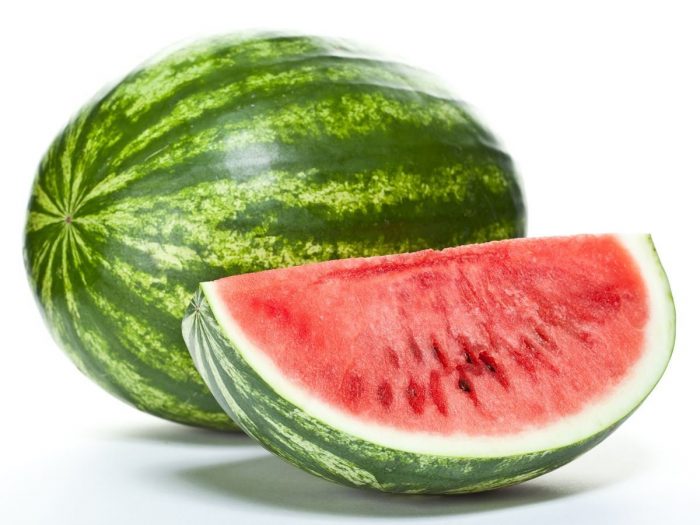
watermelon
Thin-rind-melon
Watermelon fruit (Citrullus lanatus). Melon- thin rind variety.


Watermelon was originated from southern African countries and from where it spread to all over the tropical and subtropical regions. The plant bears many yellow colored flowers that may require honeybees for pollination.
 
Externally, the fruit features smooth, deep green or yellow color thick exterior rind with light-green or gray colored vertical stripes all over its outer surface. Internally, the flesh is juicy, pink, red, or yellow with numerous small black seeds embedded in the middle third of the flesh.
Watermelon has a neutral flavor, and its taste somewhat described as plain-sweet water (light sugar syrup). Its flesh is crunchy unlike soft, creamy texture of muskmelons.
Varieties of watermelon-fruits are cultivated world over, featuring variation in their size, shape, and color of the flesh (red, orange, and yellow).

Health benefits of watermelon

  • Rich in electrolytes and water content, melons are nature’s gift to beat tropical summer thirst.
  • Watermelons are very low in calories (just 30 calories per 100 g) and fats yet very rich source of numerous health promoting phyto-nutrients and anti-oxidants that are essential for optimum health.
  • Watermelon is an excellent source of Vitamin-A, which is a powerful natural anti-oxidant. 100 g fresh fruit provides 569 mg or 19% of daily-required levels of this vitamin. It is one of essential vitamin for vision and immunity. Vitamin-A is also required for maintaining healthy mucus membranes and skin. Consumption of natural fruits rich in vitamin-A is known to protect from lung and oral cavity cancers.
  • It is also rich in anti-oxidant flavonoids like lycopene, beta-carotene, lutein, zeaxanthin and cryptoxanthin. These antioxidants are found to offer protection against colon, prostate, breast, endometrial, lung, and pancreatic cancers. Phyto-chemicals present in watermelon like lycopene and carotenoids have the ability to help protect cells and other structures in the body from oxygen-free radicals.
  • Watermelon is an excellent source of carotenoid pigment, lycopene and indeed, superior to raw red tomato. 100 g of fresh melon provides 4532 µg lycopene, whereas this value only 2573 µg for tomatoes. Studies suggest that lycopene offer certain protection to skin from harmful UV rays.
  • Watermelon fruit is a good source of potassium; Potassium is an important component of cell and body fluids that helps controlling heart rate and blood pressure; It thus offers protection against stroke and coronary heart diseases.
  • Furthermore, it contains a good amount of vitamin-B6 (pyridoxine), thiamin (vitamin B-1), vitamin-C, and manganese. Consumption of foods rich in vitamin-C helps the body develop resistance against infectious agents and scavenge harmful oxygen-free radicals. Manganese is used by the body as a co-factor for the antioxidant enzyme, superoxide dismutase.
  • Total measured antioxidant strength (ORAC value) of watermelon is 142 µmol TE/100 g.


See the table below for in depth analysis of nutrients:

Watermelon (Citrullus lanatus), fresh,
Nutritive Value per 100 g,
(Source: USDA National Nutrient data base)
Principle Nutrient Value Percentage of RDA
Energy 30 Kcal 1.5%
Carbohydrates 7.6 g 6%
Protein 0.6 g 1%
Total Fat 0.15 g 0.5%
Cholesterol 0 mg 0%
Dietary Fiber 0.4 g 1%
Vitamins

Folates 3 µg 1%
Niacin 0.178 mg 1%
Pantothenic acid 0.221 mg 4.5%
Pyridoxine 0.045 mg 3.5%
Thiamin 0.033 mg 3%
Vitamin A 569 IU 19%
Vitamin C 8.1 mg 13.5%
Vitamin E 0.05 mg 0.5%
Electrolytes

Sodium 1 mg 0%
Potassium 112 mg 2.5%
Minerals

Calcium 7 mg 0.7%
Copper 42 µg 4.5%
Iron 0.24 mg 3%
Magnesium 10 mg 2.5%
Manganese 0.038 mg 1.5%
Zinc 0.10 mg 1%
Phyto-nutrients

Carotene-alpha 303 µg --
Crypto-xanthin-beta 78 µg --
Lutein-zeaxanthin 8 µg --
Lycopene 4532 µg --

Selection and storage

Although, watermelons can be grown in all the seasons under tropical environments, they are at their best during summer months. In the stores, try to buy organically grown melons since they are richer in taste and nutrients.
Oftentimes, it is difficult to judge the ripeness and taste without checking the wedge section of the melon. Look for one that is heavy for its size featuring rind that is relatively smooth, neither overly shiny nor overly dull, without any cuts or bruises on its surface, which might have occurred during transportation.
Once at home, place the fruit in cool, well-ventilated place. The cut sections, however, should be kept inside the refrigerator.

Preparation and serving method

Wash the whole melon in cold running water; one can also otherwise wash it with wet cloth to remove any surface dirt and insecticide/fungicide residues.
watermelon cubes yellow watermelons
Watermelon cubes.
Yellow-watermelon sections along with regular variety!
Photo courtesy: Francisco
Depending upon the size that you desire, the flesh can be sliced, cubed, or scooped into balls.

Here are some serving tips:
  • Fresh watermelon should be eaten as it is, without any additions, to experience its delicious, natural sweet taste.
  • Cubes or sections of the melon are a great addition to fruit salad. Top its wedges with cold chocolate cream and relish!
  • Jam, sorbet, fruit cocktail, and juice are some nutritious and delicious recipes you can make with melons.
  • The seeds are roasted and eaten as a snack in some Asian countries.
  • Its rind is used and eaten as a vegetable in some South American countries.

    What's New and Beneficial About Watermelon

  • Alongside of tomatoes, watermelon has moved up to the front of the line in recent research studies on high-lycopene foods. Lycopene is a carotenoid phytonutrient that's especially important for our cardiovascular health, and an increasing number of scientists now believe that lycopene is important for bone health as well. Among whole, fresh fruits that are commonly eaten in the U.S., watermelon now accounts for more U.S. intake of lycopene (by weight of fruit eaten) than any other fruit. Pink grapefruit and guava are two other important fruit sources of lycopene, although in the U.S., these fruits are more often consumed in the form of juice.
  • Health scientists are becoming more and more interested in the citrulline content of watermelon. Citrulline is an amino acid that is commonly converted by our kidneys and other organ systems into arginine (another amino acid). The flesh of a watermelon contains about 250 millligrams of citrulline per cup. When our body absorbs this citrulline, one of the steps it can take is conversion of citrulline into arginine. Particularly if a person's body is not making enough arginine, higher levels of arginine can help improve blood flow and other aspects of our cardiovascular health. There's also some preliminary evidence from animal studies that greater conversion of citrulline into arginine may help prevent excess accumulation of fat in fat cells due to blocked activity of an enzyme called tissue-nonspecific alkaline phosphatase, or TNAP.
  • If you've gotten used to thinking about the juicy red flesh at the center of a watermelon as its only nutrient-rich area—and far more nutrient-rich than the more lightly-colored flesh that is farther out near the watermelon rind—it is time to change your thinking. In a recent study, food scientists compared the nutrient content of flesh from different parts of a watermelon: flesh from the center, the stem end, the blossom end (opposite from the stem), and the periphery (the part nearest to the rind). What they've discovered were impressive concentrations of phenolic antioxidants, flavonoids, lycopene, and vitamin C in all of these different areas. The exact distribution of nutrients was also highly dependent on the variety of watermelon. But there was no area in any of the watermelon varieties that came out badly in terms of nutrients, and in many of the watermelon varieties, the flesh's outer periphery contained impressive concentrations of most nutrients.
  • Recent studies have confirmed the nutritional importance of allowing a watermelon to fully ripen. For example, research has shown that the biggest jump in lycopene content occurs at the time when a watermelon's flesh turns from white-pink to pink. Yet when that flesh continues to ripen, resulting in a color change from pink to red, the lycopene content becomes even more concentrated. Prior to ripening, when the flesh of a watermelon is primarily white in color, its beta-carotene content is near zero. Even when allowed to ripen to the white-pink stage, a watermelon still contains very little of its eventual beta-carotene content. But as it moves from white-pink to pink to red, the beta-carotene content of a watermelon steadily increases. Like lycopene and beta-carotene, total phenolic antioxidants in a watermelon also increase consistently during ripening, all the way up until the appearance of fully red flesh. The bottom line: eating a fully ripe watermelon can really pay off in terms of nutrient benefits. Please see our section called "How to Select and Store" to learn about determining a watermelon's ripeness before you purchase it.

Watermelon, diced, fresh
1.00 cup
(152.00 grams)
Calories: 46
GI: medium

NutrientDRI/DV

 vitamin C16%


 copper7%


 biotin5%


This chart graphically details the %DV that a serving of Watermelon provides for each of the nutrients of which it is a good, very good, or excellent source according to our Food Rating System. Additional information about the amount of these nutrients provided by Watermelon can be found in the Food Rating System Chart. A link that takes you to the In-Depth Nutritional Profile for Watermelon, featuring information over 80 nutrients, can be found under the Food Rating System Chart.

Health Benefits

Anti-Inflammatory and Antioxidant Support

Phenolic compounds in watermelon—including flavonoids, carotenoids, and triterpenoids—make this fruit a choice for anti-inflammatory and antioxidant health benefits. If you had to pick a single nutrient from this anti-inflammatory and antioxidant category that has put watermelon on the map, that nutrient would be lycopene. Alongside of pink grapefruit and guava, watermelon is an unusually concentrated source of this carotenoid. Whereas most fruits get their reddish color from anthocyanin flavonoids, watermelon gets it reddish-pink shades primarily from lycopene. The lycopene content of watermelons increases along with ripening, so to get the best lycopene benefits from watermelon, make sure that your melon is optimally ripe. (See our section entitled, "How to Select and Store" for practical tips on selecting a fully ripe watermelon.) The lycopene in watermelon is a well-documented inhibitor of many inflammatory processes, including the production of pro-inflammatory messaging molecules, the expression of enzymes like cyclo-oxygenase and lipoxygenase that can lead to increased inflammatory response, and the activity of molecular signaling agents like nuclear factor kappa B (NFkB). Lycopene is also a well-known antioxidant, with the ability to neutralize free radical molecules.
Recent research has shown that the lycopene content of watermelon also remains very stable over time. When two-inch cubes of fresh-cut watermelon were stored in the refrigerator at 36°F (2°C) over 48 hours, researchers found virtually no deterioration in lycopene content. That deterioration did not start to become significant until about seven days of storage, when it decreased by about 6-11%. While we do not recommend waiting seven days before consuming fresh cut watermelon, we believe that the excellent stability of watermelon lycopene over a two-day period is great news for anyone wanting to enjoy fresh cut watermelon over the course of several days.
Cucurbitacin E is another unique anti-inflammatory phytonutrient (called a tripterpenoid) found in watermelon. Like the carotenoid lycopene, this anti-inflammatory nutrient has been shown to block activity of cyclo-oxygenase enzymes and neutralize reactive nitrogen-containing molecules. (Interestingly, cucurbitacin E does not appear to neutralize activity of reactive oxygen species—called ROS—but only activity of reactive nitrogen species, called RNS.)
Antioxidant carotenoids found in watermelon include significant amounts of beta-carotene. Like lycopene, the beta-carotene in watermelon also increases with ripening.
Red-pink fleshed watermelons typically contain far more lycopene and beta-carotene than yellow-white fleshed varieties. For example, one study we've seen showed red watermelon to contain over 600 micrograms of beta-carotene per 3.5 ounces of melon and over 6,500 micrograms of lycopene. By comparison, yellow-fleshed varieties were found to contain only 5-10 micrograms of beta-carotene and no measurable amount of lycopene. In red/pink-fleshed watermelons as a group, we've seen lycopene amounts that vary widely in a range of approximately 2,000–6,700 micrograms per 3.5 ounces of fresh melon. Beta-carotene in these red/pink-fleshed varieties also varies widely, in a range of approximately 5–325 micrograms. Because watermelon contains so many different phytonutrients—as well as key vitamins and minerals, as well as dietary fiber—your health is going to be improved by any watermelon variety that you choose. However, if you specifically want to maximize your lycopene and beta-carotene intake, you'll most likely want to stick with red/pink-fleshed varieties of watermelon.
It would be a mistake to ignore the important amount of vitamin C found in watermelon. In our Food Rating System, watermelon qualifies as very good source of vitamin C, even though the amount provided (about 12 milligrams per cup of fresh melon) is only 16% of the Dietary Reference Intake (DRI). However, due to its very high water content, the same amount of watermelon that provides us with 16% of the DRI for vitamin C only costs us about 46 calories, or about 2% of our total daily calories on a 1800-2000 calorie diet. That's excellent nutrient richness, and it makes watermelon a great choice for increasing vitamin C antioxidant protection.

Citrulline, Arginine, and Nitric Oxide-Related Benefits

One of the more unusual aspects of watermelon is its rich supply of the amino acid, citrulline. Citrulline is an amino acid that is commonly converted by our kidneys and other organ systems (including cells that line our blood vessels) into arginine (another amino acid). The flesh of a watermelon contains about 250 millligrams of citrulline per cup. When our body absorbs citrulline, one of the steps it can take is conversion of citrulline into arginine.
An enzyme called nitric oxide synthase (NOS)—found in many of our body's cell types—is able to take the amino acid arginine and use it to help produce a very small molecule of gas called nitric oxide (NO), which is a muscle relaxant. For example, when NO tells the smooth muscles around our blood vessels to relax, the space inside our blood vessels can expand, allowing blood to flow more freely and creating a drop in blood pressure. The relaxing of muscle tension and increasing of blood flow is also the way that NO can change erectile function in men. (The prescription medication sildenafil or Viagra (TM) works in this way.)
The amount of citrulline found in fresh watermelon is not enough to make it a food that can automatically improve blood pressure or affect other problems like erectile dysfunction. But in animal studies, intake of watermelon has been shown to help support cardiovascular function, including improvement of blood flow (through relaxation of blood vessels, or what is technically called vasodilation). In humans, intake of watermelon has been shown to increase blood levels of arginine, but only when consumed in very large amounts. For example, in one study that we reviewed, participants consumed either three cups or six cups of fresh watermelon juice daily over the course of three weeks and experienced increases in their blood arginine levels of approximately 12-22%.
Another fascinating new area of research involving watermelon and its citrulline content relates to the deposition of body fat. In animal studies, high intake of amino acid citrulline—followed by conversion of citrulline into the amino acid arginine—can result in the formation of arginine-related molecules called polyarginine peptides. These polyarginine peptides are able to block activity of an enzyme called tissue-nonspecific alkaline phosphatase, or TNAP. When TNAP activity is shut down, our fat cells (adipocytes) tend to create less fat (adipogenesis). Researchers believe that the connection between citrulline in food, arginine production by nitric oxide synthase, and fat cell metabolism may eventually provide us with additional tools for helping prevent over-accumulation of body fat.
At present, however, the best we can conclude about watermelon and its unusual citrulline content is that it's likely to provide us with some cardiovascular benefits, especially if we don't consume many foods that are high in arginine. (Some of the WHFoods highest in arginine include shrimp, spinach, sea vegetables, turkey, sunflower seeds, and sesame seeds.)

Other Health Benefits

Watermelon seeds can provide us with small but helpful amounts of both iron and zinc. We're talking about several hundred seeds (the amount contained in a typical seeded watermelon, which is not an amount that we would anticipate or suggest eating at one time) to obtain 1–2 milligrams of either mineral. Still, regular consumption of whole, seeded watermelon would provide us with nutrient benefits in this area over time. Interestingly, we've seen one study showing that the iron and zinc in watermelon seeds is surprisingly bioavailable (85-90%), despite the oxalates and phytates that are contained in the seeds. (Oxalates and phytates can sometimes bind with minerals like iron and zinc to lessen their bioavailability.)
The amount of protein in watermelon seeds is approximately 1 gram per 24 seeds. At this rate, we're likely to get several grams of protein when we eat several slices of whole, seeded watermelon. While we would not want to depend on watermelon as a key protein food, this valuable amount of protein in its seeds should at least remind us that a fruit like watermelon does have something to offer us in the way of protein benefits.
At approximately two-thirds of one gram of dietary fiber per cup, watermelon does not rank as a good, very good, or excellent source of this nutrient in our ranking system. However, you'd be receiving about 3-4 grams of dietary fiber if you enjoyed 175–200 calories of fresh watermelon in the form of several large slices, and this dietary fiber would include a nice mix of soluble to insoluble fiber. (Insoluble fibers can provide special support to the digestive system, and soluble fibers can provide special support to the cardiovascular system.) So while watermelon is not a concentrated source of fiber, we often enjoy it in larger amounts that can provide us with great fiber benefits at a low calorie cost.

Description

If you have ever tasted a watermelon, it is probably no surprise to you why this juicy, refreshing fruit has this name. Watermelon has an extremely high water content, approximately 92%, giving its flesh a juicy and thirst-quenching texture while still also subtly crunchy. As a member of the Cucurbitaceae family, the watermelon is related to the cantaloupe, squash, pumpkin, cucumber, and gourd that grow on vines on the ground. Watermelons can be round, oblong, or spherical in shape and feature thick green rinds that are often spotted or striped. (Many people report, however, that they like the taste and predictable ripeness of a watermelon best if the watermelon is symmetrical in shape.) Watermelons range in size from a few pounds to upward of ninety pounds. Between 600–1,200 different varieties of watermelon exist worldwide, but all of these varieties belong to the same scientific genus and species of plant, called Citrullis lanatus.
While we often associate a deep red/pink color with watermelons, there are many varieties that feature orange, yellow, or white flesh. These varieties are typically lower in the carotenoid lycopene than red/pink varieties.
A good bit of controversy has arisen over the exact nature of seedless watermelons. Contrary to some information that you will find on various websites, seedless watermelons are not the result of genetic engineering. Seedless watermelons are the result of hybridization. By crossing a diploid watermelon (with two sets of chromosomes) and a tetraploid watermelon (with four sets of chromosomes), it is possible to produce a watermelon that contains triploid seeds (with three chromosomal sets). When planted, these triploid seeds will grow into seedless watermelons. Seedless watermelons will typically appear to contain some white seeds even though they are labeled as seedless. These white seeds are not actually seeds, but only empty seed coats.
Ten years ago, it was somewhat rare to find seedless watermelons in the marketplace. Today, up to 85% of all watermelons produced in the U.S. are estimated to be seedless. This great increase in the availability of seedless watermelons is due to the vastly increased use of "non-bearing pollinators" by watermelon growers. Previously, growers were required to interplant rows of acreage with seeded, fruit-bearing watermelons in order to pollinate their seedless varieties. Today, they are able to pollinate with plants that produce flowers needed by bees, but yield no fruit. These non-fruit-bearing plants allow pollination to continue, but in a less time-consuming and space-consuming way. It's possible to grow seedless watermelons most anywhere that seeded watermelons will grow. Some of the more common seedless varieties include Fandango, Super Cool, Honeyheart, King of Hearts, Queen of Hearts, Crimson Trio, Scarlet Trio, and SuperSweet.
Some common varieties of seeded watermelon include Jubilee, Royal Jubilee, Royal Sweet, Crimson Sweet, Sangria, Fiesta, Sugar Baby, Baby Doll, and Charleston Gray. A 15–20 pound diploid, seeded watermelon will typical contain hundreds of seeds.

History

Watermelons are generally believed to have originated in Africa several thousand years ago and to have traveled over time from Africa to Asia to Europe to North America. Their arrival in Asia and the Middle East is believed to date back to approximately 900–1,000 A.D., and their arrival in Europe is estimated to have occurred in 1300–1400 A.D. It was not until Europeans began to colonize North America that watermelons arrived in what is now the U.S.
Today, over four billion pounds of watermelon are produced each year in the U.S. About 85% of watermelons are purchased in fresh form by consumers. Although there is some watermelon production in virtually all states, about three-fourths of all U.S. watermelons are grown in Florida, California, Texas, Georgia, and Indiana. On an average, per person basis, we eat over 15 pounds of fresh watermelon each year.
On a global basis, China is by far the largest watermelon-producing country and accounts for over half of all world production. The European Union countries, Iran, Turkey, Egypt, Brazil, and the United States are the next largest watermelon producers, but each produces less than 5% of the world total.

How to Select and Store

If you are purchasing a pre-cut watermelon that has already been sliced into halves or quarters, choose the flesh that is deepest in color and lacks any white streaking. If the watermelon is seeded, the seeds should also be deep in color, or white.
When purchasing a whole, uncut watermelon, there are several features to you'll want to evaluate. The first is its weight. A fully ripened watermelon will feel heavy for its size. Heaviness in a watermelon is a good thing because the water content of a watermelon will typically increase along with ripening, and a fully ripened watermelon will be over 90% water in terms of weight, and water is one of the heaviest components in any food
Second, look for a watermelon with a relatively smooth rind that is slightly dulled on top. The top and the bottom of a watermelon are worth determining and examining on a watermelon. The bottom or "underbelly" of a watermelon is the spot where it was resting on the ground. If that "ground spot" is white or green, the watermelon is unlikely to be fully ripe. A fully ripened watermelon will often have a ground spot that has turned creamy yellow in color. Opposite from the ground spot will be the top of the watermelon. In a fully ripened watermelon, that spot will typically not be shiny but somewhat dulled. The green color may appear in many different shades, however, from light green to deeper shades.
Perhaps most controversial about ripeness testing of a watermelon is whether or not to give it a thump. We've read many arguments both pro and con. However, among experts who recommend thumping, most seem to agree that a fully ripened watermelon will have a deeper, hollower "bass" sound rather than a solid and shallow "soprano" sound.
Finally, some grocers will be willing to core an uncut watermelon so that you can have an actual taste. (If you decide not to purchase the melon, the grocer can slice it up and sell it in sliced form.) So consider requesting this if you are uncertain as to the quality.
Uncut watermelons are best stored at temperatures of 50-60°F (10–16°C). In many regions, room temperatures will typically be warmer than 60°F and may be less than ideal for whole watermelon storage due to increased risk of decay. Better storage temperatures will typically be found in cellars or basements that are partly or completely below ground level. While we've seen one study showing increases in lycopene content when whole watermelon was stored at a temperature of 68°F (20°C), we believe that a fully-ripe or close-to-fully-ripe melon will already have outstanding lycopene content and that it would be better for you to err on the safe side in terms of decay risk if you are planning to wait several days before slicing open your watermelon.
Like temperatures above 60°F (16°C), temperatures much below 50°F (10°C) are not recommended for storage of uncut watermelons. This is due to increased risk of chilling-type injury that can decrease shelf life and flavor. (Therefore, the refrigerator would not be a good place for you to store a whole, uncut watermelon for this reason.)
With uncut, whole watermelon, one final storage precaution would be the avoidance of contact with high ethylene-producing foods like passion fruit, apples, peaches, pears, and papaya. Watermelons are ethylene-sensitive fruits that may become overly ripe too quickly under these circumstances.
Once cut, watermelons should be refrigerated in order to best preserve their freshness, taste, and juiciness. Store your cut watermelon in a sealed, hard plastic or glass container with a lid.

Tips for Preparing and Cooking

Tips for Preparing Watermelon

Wash the watermelon before cutting it. Due to its large size, you will probably not be able to run it under water in the sink. Instead, wash it with a wet cloth or paper towel.
Depending upon the size that you desire, there are many ways to cut a watermelon. The flesh can be sliced, cubed, or scooped into balls. Watermelon is delicious to eat as is, while it also makes a delightful addition to a fruit salad.
While many people are just accustomed to eating the juicy flesh of the watermelon, both the seeds and the rind are also edible and nutrient-rich. (In fact, in many parts of the world, watermelon seeds are widely enjoyed as a snack and pickled watermelon rind has a rich culinary tradition.) If you choose to eat the rind, we recommend purchase of certified organic watermelon. (The reason for this suggestion is an increased risk of unwanted contaminants like pesticide residues on the outer skin of non-organic watermelon.)
watermelon

How to Enjoy

A Few Quick Serving Ideas

  • Purée watermelon, cantaloupe and kiwi together. Swirl in a little plain yogurt and serve as refreshing cold soup.
  • In Asian countries, roasted watermelon seeds are either seasoned and eaten as a snack food or ground up into cereal and used to make bread.
  • A featured item of Southern American cooking, the rind of watermelon can be marinated, pickled, or candied.
  • Watermelon mixed with thinly sliced red onion, salt and black pepper makes a great summer salad.
  • Watermelon is a wonderful addition to fruit salad. And fruit salad can be made days ahead since cut fruit, if chilled, retains its nutrients for at least 6 days.

WHFoods Recipes That Feature Watermelon

Individual Concerns

Watermelon is not a commonly allergenic food, is not known to contain measurable amounts of oxalates or purines and is also not included in the Environmental Working Group's 2012 report "Shopper's Guide to Pesticides" as one of the 12 foods most frequently containing pesticide residues.
During the past decade, non-organic watermelons grown in part of China became the topic of widespread controversy in the popular press following the use of a synthetic growth stimulator called forchlorfenuron in their cultivation. A combination of heavy rainfall and potential overuse of the growth stimulator actually caused many watermelons on farms in Jiangsu Province to burst open, drawing media attention to this practice. While we are not aware of any data on widespread use of synthetic growth stimulators in the production of non-organic watermelon, we have seen one study predicting residues of forchlorfenuron in the range of 1-5 ppb in watermelons raised with the use of this synthetic growth stimulator. If you are seeking to lower your risk of contamination with all synthetic additives in watermelon and other foods, we recommend purchase of certified organic watermelon, since synthetic growth stimulators and other synthetic additives are prohibited in organic food production.

Nutritional Profile

Watermelon is an unusual fruit source of the carotenoid lycopene and a rich source of phenolic antioxidants. Watermelon contains cucurbitacin E, a triterpene anti-inflammatory phytonutrient, and unusual amounts of the amino acid citrulline. Watermelon is a very good source of vitamin C. It is also a good source of pantothenic acid, copper, biotin, potassium, vitamin A (in the form of carotenoids), vitamin B1, vitamin B6, and magnesium.
For an in-depth nutritional profile click here: Watermelon.

In-Depth Nutritional Profile

In addition to the nutrients highlighted in our ratings chart, an in-depth nutritional profile for Watermelon is also available. This profile includes information on a full array of nutrients, including carbohydrates, sugar, soluble and insoluble fiber, sodium, vitamins, minerals, fatty acids, amino acids and more.

Introduction to Food Rating System Chart

In order to better help you identify foods that feature a high concentration of nutrients for the calories they contain, we created a Food Rating System. This system allows us to highlight the foods that are especially rich in particular nutrients. The following chart shows the nutrients for which this food is either an excellent, very good, or good source (below the chart you will find a table that explains these qualifications). If a nutrient is not listed in the chart, it does not necessarily mean that the food doesn't contain it. It simply means that the nutrient is not provided in a sufficient amount or concentration to meet our rating criteria. (To view this food's in-depth nutritional profile that includes values for dozens of nutrients - not just the ones rated as excellent, very good, or good - please use the link below the chart.) To read this chart accurately, you'll need to glance up in the top left corner where you will find the name of the food and the serving size we used to calculate the food's nutrient composition. This serving size will tell you how much of the food you need to eat to obtain the amount of nutrients found in the chart. Now, returning to the chart itself, you can look next to the nutrient name in order to find the nutrient amount it offers, the percent Daily Value (DV%) that this amount represents, the nutrient density that we calculated for this food and nutrient, and the rating we established in our rating system. For most of our nutrient ratings, we adopted the government standards for food labeling that are found in the U.S. Food and Drug Administration's "Reference Values for Nutrition Labeling." Read more background information and details of our rating system.
Watermelon, diced, fresh
1.00 cup
152.00 grams
Calories: 46
GI: medium
NutrientAmountDRI/DV
(%)
Nutrient
Density
World's Healthiest
Foods Rating
vitamin C12.31 mg166.5very good
pantothenic acid0.34 mg72.7good
copper0.06 mg72.6good
biotin1.52 mcg52.0good
potassium170.24 mg51.9good
vitamin A43.24 mcg RAE51.9good
vitamin B10.05 mg41.6good
vitamin B60.07 mg41.6good
magnesium15.20 mg41.5good
World's Healthiest
Foods Rating
Rule
excellent DRI/DV>=75% OR
Density>=7.6 AND DRI/DV>=10%
very good DRI/DV>=50% OR
Density>=3.4 AND DRI/DV>=5%
good DRI/DV>=25% OR
Density>=1.5 AND DRI/DV>=2.5%
In-Depth Nutritional Profile for Watermelon